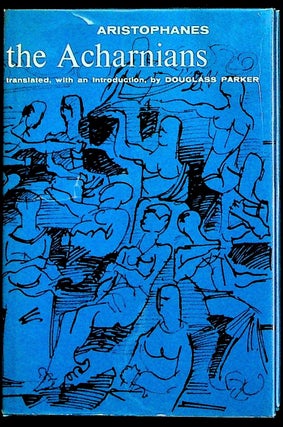
The Acharnians
Ann Arbor: The University of Michigan Press, 1969. Hardcover. Nf/Nf Dj in mylar/illus./112 pp./bright, gorgeous copy. Classical Literature. CLA4/4302. Near Fine. More

Ann Arbor: The University of Michigan Press, 1969. Hardcover. Nf/Nf Dj in mylar/illus./112 pp./bright, gorgeous copy. Classical Literature. CLA4/4302. Near Fine. More

Northampton, Massachusetts: The Gehenna Press, 1969. Hardcover. Number 34 of 200 copies signed by the famed illustrator and founder of the press, Leonard Baskin. Leonard Baskin (1922 – 2000) was an American sculptor, draughtsman, and graphic artist, as well as founder of the Gehenna Press (1942–2000). One of America's first fine arts presses, it went on to become "one of the most important and comprehensive art presses of the world", often featuring the work of poets, such as Sylvia Plath, Ted Hughes, Anthony Hecht, and James Baldwin side by side with Baskin's bold, stark, energetic and often dramatic black-and-white prints. Called a "Sculptor of Stark Memorials" by the New York Times, Baskin is also known for his wood, limestone, bronze, and large-scale woodblock prints, which ranged from naturalistic to fanciful, and were frequently grotesque, featuring bloated figures or humans merging with animals [Wikipedia].
Euripides was a Greek tragedian of classical Athens. Along with Aeschylus and Sophocles, he is one of the three authors of Greek tragedy for whom any plays have survived in full. His play, Hippolytos, is an Ancient Greek tragedy by Euripides, based on the myth of Hippolytus, son of Theseus. The play was first produced for the City Dionysia of Athens in 428 BC and won first prize as part of a trilogy. The text is extant.
This may be one of the most stunning of the many fine works published by this famous press. It is accompanied by a separate folder of ten prints with illustrations taken from the text. Bound in brown, cream, and black marbled paper boards with a brown leather spine with the author and title names in small gilt letters.
The types are Monotype Centaur and Arright. The pressman was the well known printer Harold McGrath. Baskin's etchings were printed from the plates by Emiliano Sorini. In the colophon thanks are given to John Moore of Amherst College, George Dimock of Smith College, and Wililiam Arrowsmith, James Hynd, and Thomas Gould of the University of Texas for their comments on the text. The text was taken frin W.S. Barrett's edition of the play as published by the Oxford University Press. Housed in a slipcase that also holds the folder of prints. The slipcase has the same marbled papers that were used on the book.It also has a brown leather spine with the titling in gilt. There are two small stains on the leater spine. Other than that, this work is in fine condition. Measores 13 x 20 inches. Unpaginated. PRI/080326. Fine. More
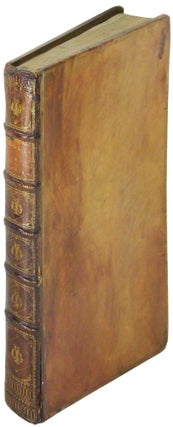
Paris: 1781. Hardcover. RARE. Very good in full leather with raised bands and gilt tooled panels on spine. Gilt tooling on inner and outer edges of boards. Pages edged in gilt; somewhat faded. Leather on spine is cracked and chipped in places, but gilt is still bright. Bumped corners. Minor bookworm damage to boards in several places. Rubbing/minor staining to boards. Marble endpapers which are faded/rubbed. Laid paper interior is very clean with several spots of foxing and some fading to endpages only. Very light soiling to title page and half-title. Green ribbon bookmark is sewn into binding. Translated from the Greek by Giacomelli. CLA2/2250. Very Good. More
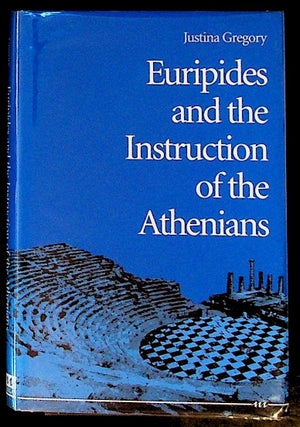
Ann Arbor: University of Michigan Press, 1991. Hardcover. Near fine in grey cloth boards with gilt title to spine and front cover. Small spot of soiling to front cover. Previous owner inscription in pen to first page. In blue dust jacket with white title to spine and front panels. 208 pages. CLA/011817. Near Fine / Fine. More
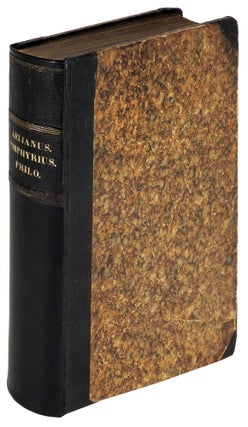
Parisiis [Paris]: Editore Ambrosio Firmin Didot, 1858. Hardcover. Rudolf Hercher ( 1821 – 1878) was a German classical philologist, who worked as a Grammar school teacher in Rudolstadt (1847–1859) and Berlin (1861–1878). He is especially known for his textual criticism of diverse Greek authors. Bound in marbled paper boards with quarter black leather spine with titling in gilt. Covers are lightly abraded and spine and tips have rubbing. Offsetting to pastedowns and free endpapers. Two previous ownership signatures on free front endpaper. The text is printed in two columns with the original Greek and the Latin translation. The text pages are lightly aged but clean and quite legible. Very good condition. Small quarto. 541,115 pages. CLASS/021023. Very Good. More
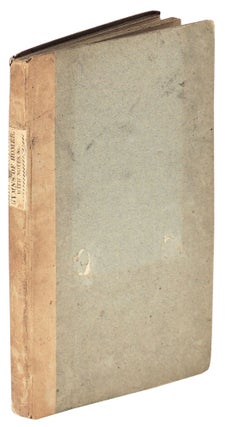
Philadelphia: Mifflin & Parry, 1830. Hardcover. Bound in the original tan paper over blue paper covered boards with paper title label to spine. Small chip to title label. Rubbing, wear, markings, and fading to boards and spine. Minor wear to corners and edges of boards. Heavy foxing to interior. Unopened pages. 127 pages. A thin octavo. POE/071422. Very Good. More

[London], England: Sir Emery Walker, Wilfred Merton, and Bruce Rogers, 1932. Hardcover. One of 500 copies offered for sale of 530 copies of this monumental edition of Homer's Odyssey. The book was printed at the works of Emery Walker, Ltd., under the supervision of Bruce Rogers. Walker and Rogers were two of the most influential figures in the world of books, design, and printing in the late 19th and early 20th century. Emery Walker (1851-1933) was an English engraver, photographer and printer. Walker took an active role in many organizations that were at the heart of the Arts and Crafts movement, including the Art Workers Guild, the Society for the Protection of Ancient Buildings, and the Arts and Crafts Exhibition Society. He also was a key figure in the world of design, typography and printing, in the teaching and dissemination of those crafts, and in the cultural landscape of late nineteenth and early twentieth century Britain. Bruce Rogers (1870 – 1957) was an American typographer and type designer, acclaimed by some as among the greatest book designers of the twentieth century. Rogers was known for his "allusive" typography, rejecting modernism, seldom using asymmetrical arrangements, rarely using sans serif type faces, often favoring faces such as Bell (at the time known only as Brimmer), Caslon, his own Montaigne, a Jensonian precursor to his masterpiece of type design Centaur. His books can fetch high sums at auction. [Wikipedia]
In his book, "Paragraphs on Printing" on pages 148-160, Rogers recounted the four year creation of the Odyssey, from his asking Lawrence to translate the work, to creating the perfect paper and making ink, and the special gold and seven-step printing operation of the rondels. It was widely recognized that Rogers had created a masterpiece (see Blumenthal, Art of the Printed Book). Rogers had been inspired by his reading of "Seven Pillars of Wisdom" to persuade Lawrence to undertake this new translation. Lawrence began his work in 1928, and after some years produced a translation of the classic using his personal experience in the fog of war as well as faithfulness to the text as his guidelines.
Bound in full black Niger morocco with gilt toes and lettering on the spine in gold. Printed on special paper made by J. Barcham Greem & Son in 16-point Monotype Centaur. There are 26 decorations of Homeric figures from Greek vase-paintings that are printed in black on roundels of gold leaf that at the head of each Book and on the title page. There is a two inch long ink line on the front free endpaper and the usual discoloration from the leather turns. Otherwise a fine copy. Accompanied by the prospectus. Not in original slipcase. Now housed in a very good fleece lined black clamshell box with a leather spine and black cloth covers. With a bit of scuffing and signs of handling. With an unusual Velcro closure. Measures 8.25 - 11.5 inches. Unpaginated [358 pages]. PRI/092724. Fine. More
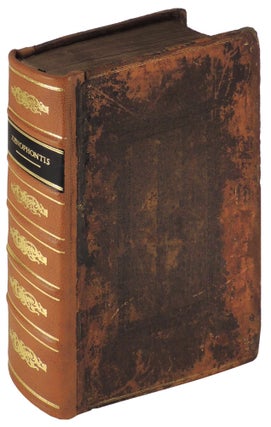
Oxonii: E Theatro Sheldoniano, 1726. Hardcover. Xenophon (c. 430 - c. 355 BCE) was a Greek philosopher, historian, and commander of the Greek army. He was also a student and friend of Socrates, and is considered to be one of the best writers of antiquity. This is his partially fictious biography of Cyrus the Great. The Greek and the later Latin translation have been revised and corrected by Thomas Hutchinson based on reviewing the Codex manscript at Oxford. This volume is printed in Greek and Latin. It includes a full page engraved frontispiece and one folding map showing Persia and the Middle East. Rebacked with modern leather spine over the original full leather boards. Black and gilt title label to spine reading simply: "Xenophontis." Gilt devices, rules, and raised bands to spine. Modern headbands, original endpapers, and modern linen cloth strips reinforcing both hinges. Wear and rubbing to boards, corners, and edges. Bookplate of George Benson Weston to front pastedown along with his ownership signature. Occasional spots of soiling and minor foxing, heavier on early and late pages. 695 pages plus errata, includes addenda and index. CLA/021323. Very Good. More
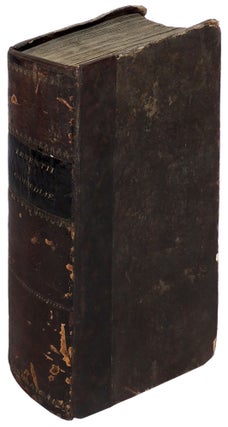
Lipsiae [Leipzig]: Sumtu E.B. Schwickerti, 1791. Hardcover. Scarce. A later edition of a work in Latin first published in 1727. Bound in quarter brown leather with titling to spine and with brown paper boards. Leather chipped on spine. Bumping and chipping to corners and edges. Interior pages have scattered foxing, browning to page edges. Ink notations on front pastedown and endpapers as well as some notes in text margins. About very good. Measures 5.25 x 9 inches. 802 pages. Very Good. More
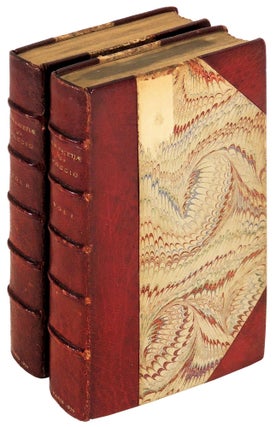
Paris: Isidore Liseux, 1879. Hardcover. Poggio (1380 - 1459) was an Italian scholar and early Renaissance humanist. He is best known for rediscovering many classical Latin texts. This set includes the life of Poggio, a memorial of the works of Poggio, and his tales. Ex-library with library stamp mostly removed from bottom of title pages and library stickers removed from front boards and rear endpapers. Both volumes are bound in three quarter red leather over marbled paper covered boards with gilt titles to spines. Minor wear to hinges and edges of boards. Marbled endpapers and top edges gilt. Both volumes have the original vellum wrappers bound in to the rear. Clean interiors with head and tailpieces and engraved initials. Text in English and Latin. An attractive set despite being ex-library. Volume I has 203 pages; Volume II has 248 pages plus 7 pages of ads. Very Good. More
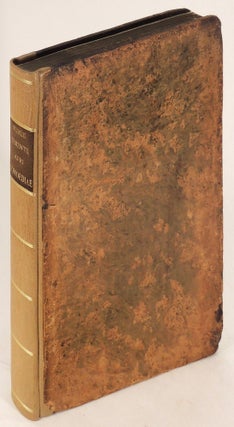
Birminghamiae: Typis Johannis Baskereville, 1772. Hardcover. IN LATIN. Publii Terentii Afri (195/185 - 159 BCE) was a Roman comedic author, who was a slave for a Roman senator before gaining his freedom (George Wythe Encyclopedia). This book collects all six of his plays: Andria, Eunuchus, Heautontimorumenos, Adelphi, Phormio, and Hecyra. Professionally rebacked with modern tan leather spine titled in gilt with gilt rules. Original full marbled leather boards with modern endpapers. Wear to edges and corners of boards. Light toning to pages. Clean overall with occasional spots of foxing and light dampstain to top margins of early pages. Creasing and foxing to original front free endpapers. Creases to corners of several pages. Size: Quarto. 364 pages. CLA/020223. Very Good. More

Amherst: University of Massachusetts Press, 1980. Hardcover. INSCRIBED BY THE AUTHOR. Presentation Copy. 8vo. Very good in a very good dust jacket. Interior is bright, crisp and clean. 163 pp. Classical Literature. CLA/5172. Very Good in Very Good Dust Jacket. More